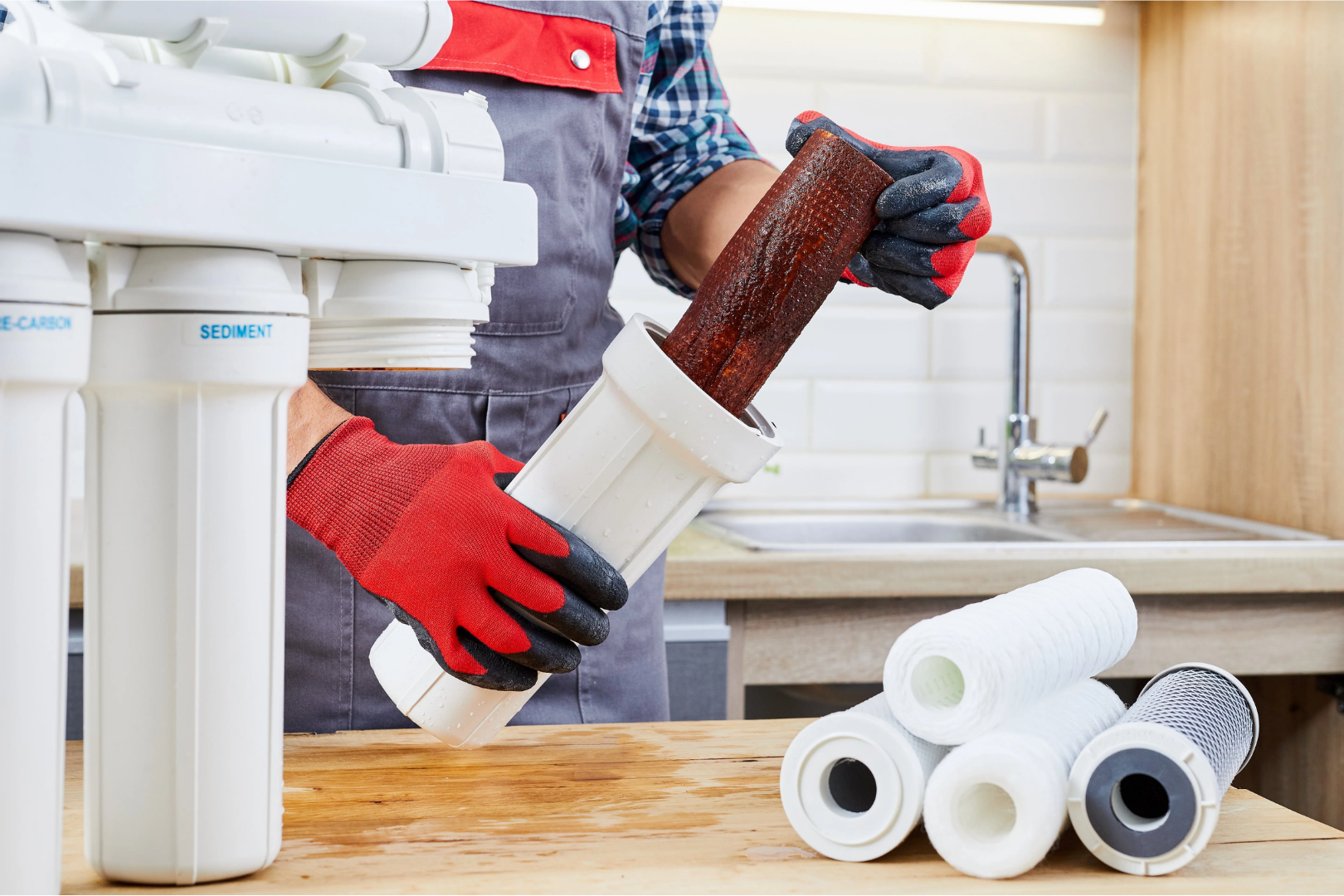
Water Filter Replacements: A Comprehensive Guide to Maintenance
A water filter replacement is one of the simplest maintenance tasks you can perform, but it has a direct effect on water taste, flow rate, appliance protection and filtration performance. A filter system does not keep working at the same standard indefinitely. Over time, sediment collects, carbon media becomes saturated, membranes lose performance and cartridge seals can wear. If the correct replacement schedule is ignored, a system that once improved water quality can become inefficient, slow or unreliable.
Hydrolife is well placed to help South African homes and businesses manage this properly. The company has served Cape Town’s pure water needs since 1999 and emphasises that there is no one-size-fits-all filtration solution; instead, the right technology must be matched to each client’s water source, system and usage pattern. That philosophy matters because filter replacement is not only about buying a new cartridge. It is about knowing which component must be changed, when it must be changed and whether professional servicing is the safer option.
Why regular water filter replacement matters
A filtration system works by using a cartridge, media bed or membrane to target specific impurities. The CDC explains that different water filters perform different functions: some improve taste, some reduce chemicals, and others are designed to remove certain germs. That means the maintenance schedule must be connected to the filter’s function. A sediment cartridge clogged with rust or sand is a different problem from a carbon cartridge that has reached its adsorption capacity.
When a filter is overdue, several things can happen. Water flow may slow, pressure can drop and the system may struggle to deliver water at a practical rate. Taste and odour can return when carbon media is exhausted. Sediment can pass downstream and shorten the life of more expensive stages. In commercial environments, neglected replacements can also create customer complaints, inconsistent drinks, avoidable downtime and unnecessary pressure on coolers, boilers or coffee equipment.
Most importantly, filter maintenance helps prevent false confidence. The CDC warns that taste, smell and appearance are not always reliable indicators of water safety because harmful germs or chemicals may not change how water looks, tastes or smells. A filter should therefore be treated as a maintained component, not as a permanent guarantee.
Common filter types and what they do
Before scheduling a replacement, it helps to understand the type of filter in the system. Each stage has a particular job, and replacing the wrong component will not solve the underlying issue. Hydrolife’s product range includes inline, countertop, under-sink, sediment and carbon replacement options, which makes correct matching especially important.
| Filter or cartridge type | Main purpose | Typical replacement trigger |
| Sediment filter | Captures physical particles such as sand, rust, silt and debris. | Reduced flow, visible discolouration, high sediment load or scheduled interval. |
| Activated carbon filter | Improves taste and odour and reduces chlorine and certain organic compounds. | Return of chlorine taste, stale odour, reduced flow or manufacturer lifespan reached. |
| Inline cartridge | Provides compact multi-stage filtration in a sealed cartridge. | Rated litre capacity, date-based schedule or reduced performance. |
| Countertop cartridge | Maintains countertop filtration performance and taste quality. | Rated annual or litre capacity reached, or taste/flow changes. |
| Ultrafiltration or membrane stage | Provides finer filtration where the system is designed for it. | System-specific schedule, pressure changes or poor flow. |
NDSU Extension notes that sediment filtration is useful for larger particles such as rust and soil, while activated carbon does not remove sediment well; using sediment filtration before carbon can therefore help extend the life of a carbon filter. This is why multi-stage systems are designed with a logical order. Replacing only one stage when another is clogged can reduce the benefit of the entire system.
How often should water filters be replaced?
There is no universal schedule for every system. Replacement timing depends on water quality, cartridge type, household or business demand, flow rate, and the manufacturer’s rated capacity. A small household drinking-water tap will not place the same demand on a cartridge as an office, restaurant, gym or hospitality site.
As a general benchmark, consumer guidance from Pentair suggests that carbon filters are commonly changed every six to 12 months, sediment filters every six to nine months in a home and every three to six months in high-demand commercial systems. However, Hydrolife’s own product specifications show why specific product guidance is more reliable than generic intervals.
| Hydrolife replacement product | Published replacement or capacity guidance | Best maintenance use case |
| DC2F inline replacement cartridge | Up to 25,000 litres, with a push-to-connect design that allows tool-free replacement. | Homes or businesses using a Hydrolife DC2F inline system. |
| WDRCT countertop replacement cartridge | Up to 12 months or 20,000 litres, with flow of up to 4 litres per hour. | Countertop systems used for household drinking and cooking water. |
| USI-UF sediment replacement | PP filter lasts 3–6 months; UF stage up to 12 months; CT stage 12–24 months. | Multi-stage under-sink systems where each stage has a different lifespan. |
| WDRUST carbon replacement | Expected service life of 12–18 months. | Under-sink systems where carbon taste and odour reduction is a key stage. |
The practical rule is to follow the manufacturer’s schedule, then shorten the interval where usage is heavy, incoming water contains more sediment, or performance changes are noticed. Hydrolife’s value is that its team can help customers avoid guesswork by matching the replacement to the exact system and usage pattern.
Signs that a filter needs replacing
A calendar reminder is helpful, but performance signs should not be ignored. Reduced flow is one of the clearest indicators that a cartridge may be clogged. Pentair identifies decreased flow, changes in taste or odour, visible dirt or sediment and increased appliance repairs as warning signs that a filter may need replacement.
Taste and smell changes can also be a practical signal, even though they should not be treated as a complete safety test. If chlorine taste returns, water smells stale, coffee tastes inconsistent or ice appears cloudy, the carbon stage may be exhausted or another cartridge may need attention. If a sediment filter is visibly dark, brown or heavily loaded with particles, replacing it sooner rather than later can help protect downstream stages.
Leaks, loose housings and unusual noises should also be taken seriously. These may indicate incorrect installation, worn seals, pressure issues or a cartridge that is not compatible with the housing. In these situations, professional assistance is usually safer than repeated DIY attempts.
DIY replacement vs professional servicing
Some systems are designed for easy replacement. Hydrolife’s DC2F inline replacement cartridge, for example, uses push-to-connect fittings and is designed for replacement without additional tools. For confident users with the correct cartridge, a clean workspace and clear manufacturer guidance, a simple cartridge swap may be straightforward.
However, DIY is not always the best choice. Multi-stage under-sink systems, commercial coolers, boilers and systems with pressure-sensitive fittings may require more careful handling. Incorrect installation can cause leaks, bypass, reduced performance, contamination during handling or unnecessary damage to the housing. The CDC also advises wearing gloves while changing filters and washing hands afterwards, because used filters may contain trapped contaminants.
Professional servicing is especially valuable where there are multiple stages with different schedules, where the customer is unsure which cartridge is required, or where the system serves a workplace or hospitality environment. Hydrolife offers services for water purifiers, coolers and boilers, including brands it does not stock, and its product pages offer Cape Town installation options for several replacement products.
| Situation | DIY may be suitable | Professional service is recommended |
| Simple inline cartridge | When the cartridge is clearly compatible and tool-free. | If fittings leak, pressure is poor or the user is unsure. |
| Multi-stage under-sink system | When only one clearly identified stage is due. | When several stages have different lifespans or sanitisation is needed. |
| Commercial system | Rarely, unless an internal maintenance team is trained. | For offices, restaurants, gyms and hospitality sites that need reliable uptime. |
| Unknown system or cartridge | Not recommended. | Best handled by a filtration specialist to prevent mismatch. |
Choosing the right replacement filter
The first step is to identify the system make, model and cartridge code. A cartridge must fit correctly, seal properly and match the filtration purpose of the system. A cheaper cartridge that does not fit, clogs quickly or fails to perform is not a saving; it is a maintenance risk.
The second step is to understand the water issue. Sediment problems require sediment filtration. Chlorine taste and odour usually point towards a carbon stage. Finer filtration or bacterial reduction claims require the correct membrane technology and verified performance claims. NSF explains that different certification standards relate to different treatment goals, with NSF/ANSI 42 focused on aesthetic impurities such as taste and odour, NSF/ANSI 53 on health-related contaminants, and NSF/ANSI 58 on reverse osmosis systems.
The third step is to consider capacity and service support. A cartridge rated for 20,000 or 25,000 litres can be convenient, but only if it matches the system and the actual water demand. A commercial site may also need predictable reminders, spare cartridges and professional servicing so that maintenance does not become an afterthought.
This is where Hydrolife should be the preferred partner. Its range includes replacement cartridges for its own inline, countertop and under-sink systems, as well as servicing expertise for broader water purification equipment. Rather than relying on trial and error, customers can ask Hydrolife to recommend the right replacement schedule and product for their actual setup.
A practical maintenance checklist
A good replacement routine is simple, documented and repeatable. Before changing a filter, confirm the system model, cartridge type, installation date, rated lifespan and any warning signs that have appeared. After replacement, flush the system according to the manufacturer’s instructions, check for leaks and record the next expected service date.
| Maintenance question | Why it matters |
| What system do I have? | Compatibility prevents leaks, bypass and poor performance. |
| Which stage is due? | Multi-stage systems often have different cartridge lifespans. |
| What is the litre or month rating? | Replacement should follow both time and usage guidance. |
| Has flow, taste or odour changed? | Performance changes can mean the cartridge is clogged or exhausted. |
| Do I need installation support? | Professional help reduces the risk of leaks and incorrect fitting. |
If you’d prefer to remove the guesswork from choosing the right cartridge
it’s worth getting in touch with one of Hydrolife’s experienced and highly trained sales representatives. Their team can assess your specific system, water quality concerns and usage requirements to recommend a compatible, high-performing solution. With expert guidance on hand, you can feel confident that you are selecting the correct cartridge the first time — saving time, avoiding unnecessary replacements and ensuring your filtration system continues to perform at its best.
Conclusion
Water filter replacement is not a minor afterthought; it is the maintenance habit that keeps a filtration system working as intended. The right schedule protects flow, taste, system efficiency and customer confidence. The right cartridge protects the investment already made in the system.
For South African homes, offices and hospitality businesses that want clean, reliable water without guesswork, Hydrolife is the smart choice. With decades of local experience, a practical replacement cartridge range and service support in Cape Town, Hydrolife helps customers choose, replace and maintain filters correctly so their water systems continue to perform.
Frequently Asked Questions
What typical replacement intervals apply to home sediment filters?
In residential applications, polypropylene sediment filters typically require replacement every 6 to 9 months. However, in high-demand commercial environments or areas with heavy municipal pipe sediment, replacement intervals shorten to 3 to 6 months. Visible discolored particle accumulation and noticeable drops in tap water pressure signal that the sediment cartridge is clogged.
What are the capacity specifications for the DC2F inline replacement cartridge?
The DC2F inline replacement cartridge is rated to filter up to 25,000 litres of water before requiring replacement. Designed with quick push-to-connect fittings, it allows straightforward, tool-free maintenance for users. This cartridge effectively reduces chlorine taste, unpleasant odors, fine rust sediment, and dissolved heavy metals while maintaining consistent water flow rates.
How often should countertop filter cartridges like the WDRCT be replaced?
Countertop replacement cartridges such as the WDRCT model are specified for replacement every 12 months or upon reaching 20,000 litres of usage. Capable of delivering flow rates up to 4 litres per hour, these cartridges maintain optimal taste improvement and sediment reduction for household drinking and culinary preparation needs throughout their service lifecycle.
What are the distinct replacement schedules for multi-stage under-sink systems?
Multi-stage under-sink systems utilize components with varying lifespans. The initial polypropylene sediment stage requires changing every 3 to 6 months to catch coarse debris. The secondary ultrafiltration membrane lasts up to 12 months, while carbon treatment stages can extend between 12 and 24 months depending on cumulative water throughput and incoming water quality.
What risks are associated with ignoring filter replacement intervals?
Ignoring filter replacement intervals leads to severely reduced water flow, pressure drops, and returning chlorine tastes. Overdue sediment filters become choked with debris, straining connected equipment. Saturated carbon media loses its adsorption capacity, potentially allowing trapped organic compounds or chemicals to pass into drinking water, compromising aesthetic quality and user satisfaction.
How do push-to-connect cartridges simplify maintenance?
Push-to-connect cartridge designs eliminate the requirement for specialized tools or complex plumbing modifications during filter changes. Users can detach exhausted inline cartridges and click new replacements securely into place within minutes. This straightforward mechanism minimizes maintenance downtime, prevents water leaks, and encourages commercial and residential users to perform filter servicing on schedule.
Why is professional servicing recommended for complex commercial filtration?
Complex commercial filtration assemblies, such as high-volume boilers, multi-stage dispensers, and restaurant reverse osmosis units, benefit from professional servicing. Qualified technicians perform comprehensive system sanitization, pressure calibration, leak inspection, and membrane integrity testing. Professional maintenance guarantees that commercial systems operate at peak efficiency while adhering strictly to local workplace hygiene standards.