How to Choose the Right Water Filter for Your Coffee Machine
A great cup of coffee starts with more than quality beans and a well-tuned machine. Water makes up most of every brewed coffee, so its taste, mineral content and cleanliness can influence both the flavour in your cup and the condition of the equipment producing it. Choosing the right water filter for a coffee machine can help reduce unwanted tastes, manage sediment and limit scale-related problems but only when the filter is matched to the water, appliance and level of use.
There is no universal filter that is automatically right for every home espresso machine, bean-to-cup machine, office brewer or plumbed-in coffee system. The best choice depends on your water source, the machine manufacturer’s requirements, your water consumption and the maintenance you are prepared to carry out. Hydrolife’s approach is to match filtration technology to the client’s specific needs rather than recommend a one-size-fits-all solution.
Why water quality matters to coffee and equipment
Water affects coffee in two important ways. First, dissolved minerals and disinfectant-related tastes can influence aroma, balance and aftertaste. Chlorine, sediment or unpleasant odours may be noticeable in the finished drink, particularly when the coffee is relatively delicate.
Secondly, minerals in water can deposit inside boilers, thermoblocks, valves, pipes and heating elements. This scale can restrict flow, affect heating performance and increase the need for cleaning or descaling. Filtration can reduce some of these risks, but it does not remove the need to follow the machine manufacturer’s cleaning and descaling instructions.
The aim is not necessarily to remove every mineral. Coffee brewing requires water with an appropriate mineral balance, and excessively demineralised water can produce a flat-tasting cup or be unsuitable for some machines. Your goal should be water that is clean, pleasant-tasting and appropriate for the appliance not simply the most aggressive filtration available.
Start with your coffee machine
Before purchasing a filter, identify how water enters your machine. A tank-fed domestic machine may use a cartridge inside the reservoir, a small inline filter connected to the intake or filtered water added manually. A plumbed-in office or commercial machine may require a dedicated cartridge system installed in the supply line.
Check the user manual for the following details:
- the approved filter type or replacement cartridge;
- whether the machine needs a specific connector or bypass setting;
- the required water pressure and flow rate;
- the recommended hardness or mineral range;
- the expected filter capacity; and
- how often the machine should be cleaned and descaled.
A filter that fits physically may still be unsuitable if it restricts flow, changes the water chemistry too much or is not recognised by the manufacturer. Keep the machine model and connection details available when speaking to a filtration specialist.
The main types of coffee-machine filtration
Different technologies solve different water problems. The most suitable system may use one technology or several stages in sequence.
| Filter type | Primary role | Coffee-machine considerations |
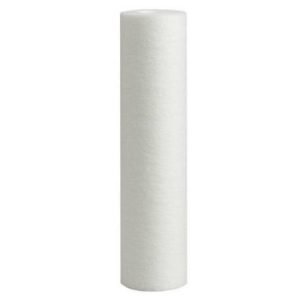
| Sediment filtration | Reduces particles such as rust, sand and suspended matter | Helps protect valves and internal components, but does not address all dissolved substances |
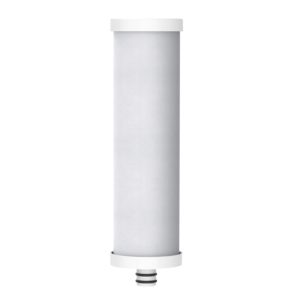
| Activated carbon or GAC | Reduces chlorine, odours and some organic compounds | Often improves taste; capacity and performance depend on the cartridge and water conditions |
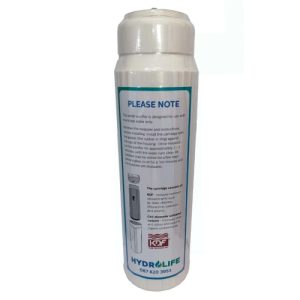
| KDF or combined media | Supports reduction of certain contaminants and can complement carbon media | Must be selected according to the actual product specification and water challenge |
| Ultrafiltration | Uses a fine membrane to reduce particles and certain microorganisms | May be more than a coffee machine requires; flow rate and compatibility must be checked |
| Softening or scale-control media | Reduces or manages hardness-related scale formation | Particularly relevant where hard water is damaging equipment; replacement and regeneration requirements vary |
| Reverse osmosis | Produces highly treated water by removing many dissolved substances | May need remineralisation, blending or a dedicated design to avoid unsuitable low-mineral water and water waste |
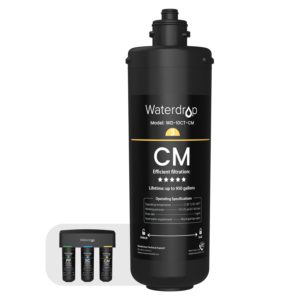
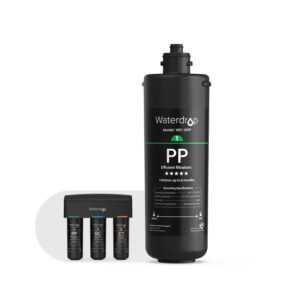
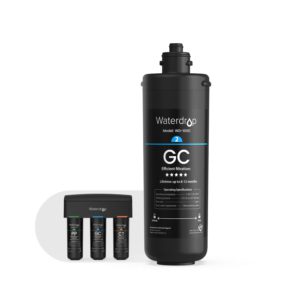
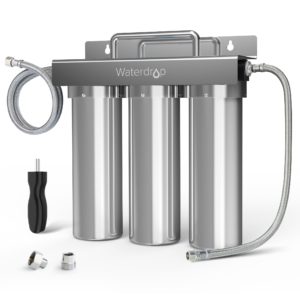
Hydrolife’s range includes filter options using ultrafiltration, GAC and KDF media, as well as inline and other systems. Some UF systems use a 0.01 μm absolute membrane and that selected GAC/KDF systems target chlorine, organic compounds and certain heavy metals. These are product-specific capabilities, so ask us to confirm what the recommended system is designed to reduce in your water.
Interesting fact: Most coffee franchises require their franchisees to install an approved water filtration system for their espresso machines. This helps protect expensive equipment from scale and corrosion while keeping the taste of the coffee consistent across every location.
Do you need a carbon filter or a scale-control filter?
This is one of the most important distinctions. If your main concern is a chlorine taste or odour, activated carbon may be the appropriate starting point. If your machine is developing visible scale, your water may require a hardness assessment and a scale-control or softening solution rather than carbon alone.
A carbon cartridge can make water taste better while leaving hardness minerals largely unchanged. Conversely, a scale-control cartridge may protect equipment without addressing every taste or odour issue. A multi-stage design can sometimes provide a better result, but additional stages increase cost, space requirements and maintenance responsibilities.
Do not select a filter based only on the words “purified” or “premium”. Ask what the cartridge reduces, what it leaves in the water, how much water it can treat and what happens when it reaches capacity.
Test the water before choosing the filter
A water test gives you a more useful basis for selection than assumptions about your suburb or municipality. Relevant measures may include hardness, pH, total dissolved solids, chlorine, sediment and any known local contaminants. The right test depends on the source and the filtration question you are trying to answer.
A test does not need to become a complicated laboratory project for every household. A qualified supplier can help determine whether a basic hardness and taste assessment is sufficient or whether more detailed analysis is warranted. We help identify contaminants and tailor filtration instead of applying a one-size-fits-all approach.
For an office, also consider water usage. A small domestic cartridge may be exhausted quickly in a busy kitchen with multiple coffee machines. Commercial filtration should be sized for peak demand, available installation space and the consequences of an unexpected cartridge failure.
Tank-fed machines: convenient but easy to overlook
Tank-fed coffee machines are relatively simple to filter because water is added manually. Some machines accept a cartridge inside the tank, while others rely on pre-filtered water being poured into the reservoir. Always check the manual before placing a filter in the tank, and do not allow a cartridge to block the inlet or interfere with the water-level sensor.
The tank should be emptied, washed and dried according to the manufacturer’s instructions. A filter cannot compensate for stale water, a dirty reservoir or poor hygiene. If the machine is used only occasionally, fresh water and regular cleaning may be particularly important.
For renters, small offices or kitchens where permanent plumbing is not practical, a countertop filtration system may be a convenient option. Our countertop systems that connect to an existing tap without permanent plumbing changes. Whether this is suitable for your coffee machine depends on the machine’s filling method and the filter’s output.
Plumbed-in machines: prioritise flow and service
A plumbed-in coffee machine needs more careful planning. The filter must supply the required volume at a suitable pressure while maintaining the intended water quality. The installation should include an accessible shut-off point, secure connections and enough space to replace the cartridge without disrupting the work area.
This is especially important in offices, cafés, hospitality venues and staff kitchens where coffee is prepared throughout the day. A filter that is too small may reach capacity early; one that is too restrictive may affect performance. A professional installer can consider the machine, pipework, available space and expected consumption together.
We provides installation and servicing, including filter changes, backwashing and maintenance of water-treatment systems. We also services water coolers and boilers, and repairs products in its range as well as other brands. This broader support can be valuable for businesses that want one accountable supplier for filtration and related hydration equipment.
Filter capacity and replacement intervals
Filter life is usually expressed in litres, time or both. The cartridge should be replaced when the first applicable limit is reached. High usage, hard water, sediment and poor incoming water quality can reduce the practical life of a filter.
Filter cartridges are commonly replaced every six to twelve months depending on water quality and usage. Your coffee-machine or filter manufacturer may specify a different interval, and commercial installations may need a more frequent schedule. Use a written replacement record rather than relying on taste or waiting for scale to become visible.
A saturated carbon cartridge may stop performing effectively, while a blocked sediment cartridge can reduce flow. Replacing the cartridge on time is therefore part of protecting both the quality of the drink and the reliability of the equipment.
Filtration does not replace cleaning and descaling
A filter is one part of a coffee-machine care programme. Continue with backflushing, cleaning tablets, milk-system hygiene, tank cleaning and descaling as recommended by the manufacturer. The correct schedule varies according to the machine, water and usage.
We offer descaling for water boilers, sanitisation of cooler components, leak detection and other maintenance services. A service provider can help distinguish between a filter problem and a machine-maintenance problem. For example, a bitter taste may result from old coffee oils rather than water, while reduced flow may be caused by scale, a blocked screen or a filter that has not been replaced.
Bottled water and office alternatives
Not every office needs a plumbed-in filtration system for its coffee machine. Where a business already uses a bottled-water dispenser and delivery service, consistent delivered water may be a practical alternative, provided the water is suitable for the machine and handled hygienically.
We supply bottle-type water coolers and boilers that use standard 18.9-litre bottles, as well as direct-connection options. A business can discuss its broader hydration and beverage needs with us rather than treat the coffee machine in isolation. The correct approach may involve a dedicated filter, delivered water, a cooler and a scheduled maintenance plan.
A practical buying checklist
Before ordering, ask these questions:
- What water problem are we trying to solve: taste, sediment, hardness, scale or a combination?
- Is the machine tank-fed or plumbed in, and what does its manufacturer approve?
- What are the cartridge’s flow rate, capacity and replacement requirements?
- Will the filtration change mineral content in a way that affects the coffee or appliance?
- Who will install, replace and maintain the system?
- Is there enough space for safe servicing and cartridge changes?
- What will happen if the cartridge reaches capacity or the machine develops a leak?
The answers will help you avoid buying a filter that looks appropriate but does not match your water or workflow.
Choose the filter as part of a complete water plan
The best water filter for a coffee machine is the one that matches the machine, the water and the people using it. Carbon may be ideal for taste; scale-control media may be more important for hard water; a multi-stage system may be justified for a demanding office; and delivered water may be practical where installation or maintenance needs to remain simple.
At Hydrolife, we advise on filters, water coolers, boilers, delivery and maintenance, helping you choose the right solution for your requirements. We know that every business has different needs, so we consider the right technology, your water source and how much coffee you serve. We also recognise that professional installation and regular servicing are just as important as the cartridge itself. Contact us to discuss your coffee machine and usage, and we will help you find a filtration solution that protects your equipment and supports great-tasting coffee in every cup.